Delhi's unauthorised colonies: what a PM-UDAY conveyance deed gives a home buyer, and what it doesn't
The 2019 law lets residents of 1,731 Delhi colonies swap GPA papers for a registrable deed for a small charge. Here is how the charge is worked out, what the April 2026 'as-is, where-is' amendment added, and what to check before buying.
Rules and rates as of 22 October 2026.
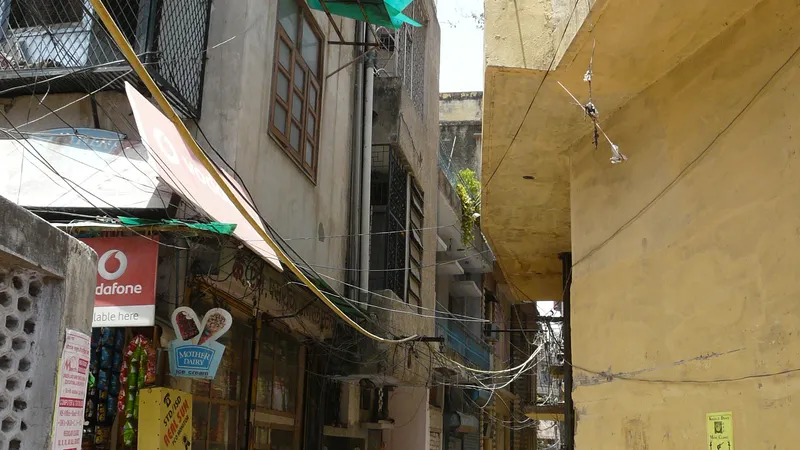
Delhi has 1,731 unauthorised colonies, home to about 45 lakh people by the Delhi government's own count. For decades many of these houses changed hands on a general power of attorney, an agreement to sell and a Will rather than a registered sale deed, and the 2019 law itself records that banks had not been lending against them. PM-UDAY, the scheme built on a 2019 law, was meant to end that. If you are about to buy in one of these colonies, here is what the scheme can and cannot give you.
The law in one paragraph
The National Capital Territory of Delhi (Recognition of Property Rights of Residents in Unauthorised Colonies) Act, 2019 (Act 45 of 2019) is short. Section 3 lets the Centre regularise property transactions in these colonies despite the Stamp Act, the Registration Act and the Supreme Court's 2011 Suraj Lamp judgment. A "resident" who holds a registered, unregistered or notarised power of attorney, agreement to sell, Will or possession letter, with proof of payment, can get "ownership or transfer or mortgage" rights through a conveyance deed (on government land) or an authorisation slip (on private land) after paying a charge. Stamp duty and registration fees are paid only on the amount written in that deed or slip, and no duty is due on the earlier chain of sales. Tenants, licensees and permissive users get nothing under the Act.
The detail sits in the DDA's Regulations of 29 October 2019 (G.S.R. 814(E)). They cover 1,731 colonies, minus 69 "affluent" ones listed in Annexure I, and exclude land such as reserved forest, the Yamuna flood plain (Zone O) and the Ridge. A colony qualifies if it existed on 1 June 2014 and was at least 50% built up on 1 January 2015, according to the regulations and the DDA's PM-UDAY FAQs.
What changed in April 2026
For six years a resident could get ownership papers but often could not get a building plan passed, because the colony had no approved layout plan. A DDA gazette amendment dated 6 April 2026 (No. 242) addressed that. It added regulation 6A, under which notified colonies are regularised "as-is, where-is", and a missing layout plan is no longer a bar. The Municipal Corporation of Delhi or the local body issues a Certificate of Regularisation on application. A separate DDA notification of 8 April 2026 named 1,511 colonies for this.
The same amendment replaced "Delhi Development Authority" with "Government of National Capital Territory of Delhi" in the regulation that confers rights and in Annexure IV. In practice, says a PIB release of 7 April 2026, the Delhi government's Revenue Department now issues conveyance deeds and authorisation slips, with DDA running the portal. The same release says about 40,000 deeds and slips had been issued by 31 March 2026.
Regularisation covers the existing structure only. If the owner rebuilds or modifies the house, they must surrender land equal to half of the shortfall in road width (towards 6 metres for internal roads and 9 metres for approach roads), and any floor area above the Master Plan limit attracts penal charges of three times the additional-FAR charge. Plots and buildings are treated as residential, with small convenience shops (up to 20 sq m on a 6-metre road) allowed.
What a buyer actually gets
- A registrable title document. Once the seller's conveyance deed or authorisation slip is issued and registered, the property can be sold on an ordinary registered sale deed. The DDA scheme page says residents "can sale/purchase their properties without any hindrance".
- The right to mortgage. The Act gives mortgage rights, but the FAQs say a loan is at the "discretion" of the bank. No RBI rule we found obliges a lender to finance these homes.
- Land rights tied to your floor. Regulation 5(1) gives rights over the land under the building in proportion to the carpet area of the floor you hold. That matters for builder floors, where each floor is sold separately.
- Not, by itself, a passed building. The conveyance deed covers ownership. The structure needs MCD's Certificate of Regularisation under the 2026 rules, and anything built above four storeys is outside the FAQ's eligibility.
The charge: how it is worked out
Regulation 4 sets the charge on carpet area (as defined in RERA), using the circle rate of the highest category locality around the colony. Your band depends on the total carpet area of all your properties in all unauthorised colonies, so a buyer who already owns one cannot split holdings to get a lower rate. On government land with a built-up house, the formula is carpet area × ¼ × the band percentage × circle rate. On private land the charge is half that.
| Total carpet area held | Rate of circle rate | Government land, 60 sq m | Government land, 100 sq m | Private land, 100 sq m |
|---|---|---|---|---|
| Below 100 sq m | 0.5% | ₹1,732.50 | n/a | n/a |
| 100 to under 250 sq m | 1% | n/a | ₹5,775 | ₹2,887.50 |
| 250 sq m and above | 2.5% | n/a | n/a | n/a |
The figures use the circle rate implied by the DDA's own illustration (explained below) and are the base charges for applications filed before 1 April 2022. Note the cliff at 100 sq m: 99 sq m at 0.5% works out to ₹2,858.63, while 100 sq m at 1% is ₹5,775.
Worked example
The DDA's second amendment of 14 September 2023 says charges were valid until 31 March 2022 and "shall be enhanced every year by eight percent". Its illustration: a 100 sq m house in a G-category locality on government land paid ₹5,775 before 1 April 2022, ₹6,237 in 2022-23 and ₹6,699 in 2023-24.
Working backwards, ₹5,775 = 100 × ¼ × 1% × circle rate, so the circle rate used is ₹5,775 ÷ 0.25 = ₹23,100 per sq m.
Now take a 60 sq m flat in the same locality, on government land, and an owner with no other property in these colonies:
- Base charge = 60 × ¼ × 0.5% × ₹23,100 = ₹1,732.50
- If the 8% simple yearly step continues to 2026-27 (five steps from 1 April 2022, or 40%): ₹1,732.50 × 1.40 = ₹2,425.50, about ₹2,400 after rounding to the nearest ₹100 as regulation 4(11) requires
- Same flat on private land: half, ₹1,212.75, about ₹1,200
Stamp duty and registration fee are then paid on that deed amount, not on the market value. The 2026-27 figure is our extension of the 2023 illustration, which stops at 2023-24. Confirm the exact charge on the portal before you rely on it.
Before you pay a token amount
- Check the colony is on the list of 1,731 and not among the 69 affluent colonies or on excluded land.
- Ask the seller for the registered conveyance deed or authorisation slip, not just a PM-UDAY case ID. The FAQs say a deed or slip must be registered within three months of issue or it lapses.
- If the seller has only a GPA chain, the rights would have to be claimed first. Read our piece on why a GPA sale does not pass title, and get a lawyer to trace the chain.
- Ask whether MCD's Certificate of Regularisation has been applied for, and count the floors.
- Ask your bank, in writing, whether it will lend on the property before you commit.
News reports in October 2026 mention a 31 October 2026 cut-off for fresh PM-UDAY applications and an MCD rebate of up to 75% on regularisation charges until then. We could not open the Revenue Department notice or the MCD order, so treat both as unconfirmed and check with the department directly.
What this means for you
If you are looking at a house or builder floor in a Delhi unauthorised colony, ask the seller this week for three things: the registered conveyance deed or authorisation slip (with the Sub-Registrar's registration details), the PM-UDAY case ID, and the status of any MCD Certificate of Regularisation application. Check the colony against the DDA list of 1,731 and the 69 affluent exclusions. If the seller holds only a GPA, agreement to sell or Will chain, take the documents to a property lawyer before paying any token, and ask your bank in writing whether it will lend on the property. Do not rely on a reported 31 October deadline or MCD rebate until you have seen the official notice.
Sources
- National Capital Territory of Delhi (Recognition of Property Rights of Residents in Unauthorised Colonies) Act, 2019 (Act 45 of 2019), text via PRS Indiaprimary
- DDA, NCT of Delhi (Recognition of Property Rights of Residents in Unauthorised Colonies) Amendment Regulations, Gazette of India Extraordinary Part III s.4 No. 242, 6 April 2026primary
- DDA, Second Amendment Regulations 2023 (8% yearly enhancement of charges), Gazette No. 641, 14 September 2023primary
- PIB (Ministry of Housing and Urban Affairs), Regularisation of Unauthorised Colonies in Delhi on 'As-is Where-is' Basis, 7 April 2026primary
- DDA, PM-UDAY Frequently Asked Questionsprimary
- NCT of Delhi (Recognition of Property Rights of Residents in Unauthorised Colonies) Regulations, 2019, G.S.R. 814(E), 29 October 2019, text via Indian Kanoonother